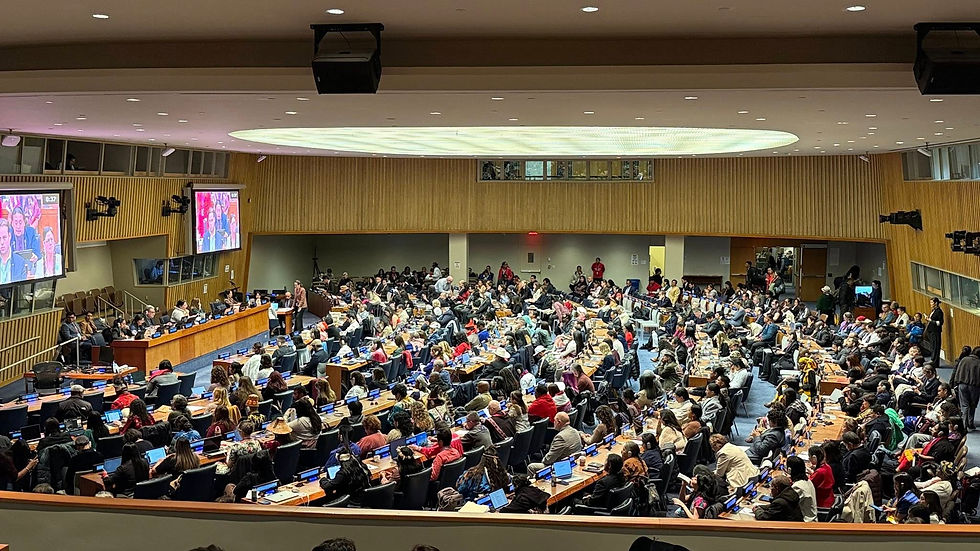
The Fossil Fuel Phaseout is Here! Analysis and Report Back on the First Conference on Transitioning Away from Fossil Fuels

Amidst a growing polycrisis of geopolitical tensions, global conflict, and climate disasters, a need for a fossil fuel phaseout and transformation of a fossil fuel based economy has never been more dire. Within this context, scientists, Indigenous Peoples, youth, Afrodescendents, women in all their diversity, farmers, social movements, NGOs, academics, and government representatives from 57 countries convened in the major coal port-city of Santa Marta, Colombia for the First Conference on Transitioning Away from Fossil Fuels. From April 24-29, the Conference brought together global leaders and civil society to discuss three primary pillars related to fossil fuel phaseout, outlined by the co-hosting governments of Colombia and The Netherlands:
Overcoming economic dependence
Transforming supply and demand
Advancing international cooperation and climate diplomacy
WECAN was honored to engage in the Conference on Transitioning Away from Fossil Fuels and present policy analyses, coordinate and participate in movement-building gatherings, convene leaders, and contribute to outcome documents advocating for a fossil fuel phaseout and a Just Transition. Situated between the Caribbean Sea and the Sierra Nevada de Santa Marta mountains, which local Indigenous Peoples call “the Heart of the World,” the global convening laid the groundwork for historic progress toward phasing out fossil fuels.
Reflecting on the Conference, Osprey Orielle Lake, WECAN Executive Director, released the following statement: “As global interlocking crises continue to escalate, there is no time or allowance for business-as-usual. The conference in Santa Marta generated resounding energy, hope, wisdom, and calls to action shared by the coalition that came together—including civil society, Indigenous leaders, government representatives, Afro-descendants, scientists, youth, feminists, and many more—who sent a bold message to the world: it's not if we need to phase out fossil fuels, it's how we will do it. We are grappling with colonial-patriarchal systems that are the very foundation of extractive global economies and power, consequently the work ahead will not be easy, but it is the time for significant breakthroughs. What is important now is furthering cross-sector collaboration and intentional multilateralism, while centering the leadership of those most impacted by the climate crisis and fossil fuel extraction. The historic conference in Santa Marta provided the world with a vantage point to see a more just future on the horizon, and brought to life a new space specifically dedicated to building an equitable, immediate phaseout of fossil fuels and Just Transition. Our fight is not over and we will continue in this work so we do not replicate extractive practices as we move away from fossil fuels. We will bring our voices, vigor, and visions two-fold to the 2027 Conference in Tuvalu, and all of our organizing in between, to advance a binding, fair and funded phaseout and uplift the mechanism of the Fossil Fuel Treaty.”
For the first time, government leaders gathered not to debate if a fossil fuel phaseout is necessary, but how to make it a reality. The science is unequivocal: fossil fuels are the leading cause of the climate crisis. For decades, communities and climate leaders have been demanding a Just Transition away from fossil fuels, yet UN climate negotiations have stalled progress, promoted false solutions, and opened the doors to fossil fuel lobbyists.
Despite over 80 countries calling for a phaseout roadmap, the final negotiations of COP30 in Belém, Brazil did not deliver any real progress on curbing fossil fuels. Alongside objections from other Latin American countries, Daniela Durán González, Head of International Affairs at the Colombian Ministry of Environment and Sustainable Development, halted the COP30 closing plenary to express deep frustrations about the erasure of fossil fuel phaseout language from final decisions. This echoed decades-long dissatisfaction from civil society and climate-vulnerable nations about the inadequate, incremental, and often nonexistent progress on implementing a transition away from fossil fuels. As COP30 negotiations drew to a close without securing any fossil fuel commitments, it became clear that a new process was needed. During a High-Level press conference in Belém, the governments of Colombia and The Netherlands announced that they would co-host the First International Conference on the Just Transition Away from Fossil Fuels in Santa Marta, Colombia.

The gathering was not a consensus-based negotiation with de facto vetoes; it instead forged a new model of multilateral cooperation where committed countries worked together to advance pathways for a fossil-free future. The conference co-hosts acknowledged that transitioning away from coal, oil and gas is not about switching one fuel source for another. Realizing a just energy future requires a profound economic transformation that dismantles systemic dependencies, addresses the burden of unjust debt, and broadens equitable energy access. This systemic shift must cultivate diversified, resilient economies, ensuring that the transition remains fundamentally fair and rights-based while securing substantial, life-affirming benefits for frontline and marginalized communities.
On the ground, there were significant hurdles to actualizing the level of participation from civil society to ensure climate justice remains at the center of implementation. Yet, Santa Marta is the beginning of a much needed diplomative movement, and in the High-Level segment civil society, government representatives, and other stakeholders had an opportunity to speak candidly about the necessity and challenges of developing a global phaseout framework.
Undoubtedly, there are considerable hurdles to overcome regarding how the Just Transition will occur, whose voices are heard, who will benefit, if there will be a rights-based framework, and if climate justice principles will be applied. There are real gaps that civil society will need to strongly address in this process, and important lessons for governments to reflect on in creating forums for meaningful participation and engagement with civil society.
After the week of dialogues and advocacy efforts, the co-hosts announced three outcomes of the conference:
A second international conference will take place in Tuvalu in 2027, co-hosted by Tuvalu and Ireland
Governments established three ongoing workstreams to identify concrete opportunities and align with existing initiatives. The workstreams include working groups focusing on roadmaps; macroeconomic dependencies and financial architecture; and creating alignment between fossil fuel producers and consumers for a fossil fuel transition
The Science Panel for the Global Energy Transition (SPGET) was launched to support countries in overcoming fossil fuel dependencies
See the full co-host takeaways here, and more information on the outcomes from the Conference is below.
The Need for a Fossil Fuel Phaseout

Fossil fuels are by far the leading cause of the climate crisis, responsible for around 68% of greenhouse gas emissions and almost 90% of CO2 emissions worldwide. The IPCC Sixth Assessment Report provided a clear scientific consensus regarding the urgency of the climate crisis and the significant risks associated with overshooting the 1.5 °C guardrail. Already, planetary warming reportedly exceeded 1.5 °C for the first time in 2024, a dangerous breach that is accelerating weather anomalies and temperature extremes across the globe. As some governments continue to expand oil, gas, and coal production, a Just Transition away from fossil fuels has become a matter of global survival.
The International Court of Justice (ICJ)’s 2025 Advisory Opinion affirmed that states’ legal responsibility to mitigate the climate crisis and protect human rights includes curbing fossil fuel production, consumption, and subsidies. According to the ICJ, the world’s highest court, failure to do so “may constitute an internationally wrongful act.” However, governments, financial institutions, and corporations have failed to deliver any meaningful commitments on transitioning away from fossil fuels. The world is currently on track to produce around 120% more fossil fuels by 2030 than what would be consistent with keeping temperatures below 1.5°C.
It’s not just emissions. The proliferation of fossil fuels has enabled a growing polycrisis of ecological devastation, energy imperialism, militarism, global inequality, and economic instability. Decisive action is needed to address these interlocking crises and the unprecedented harms connected to the fossil fuel industry. Fossil fuel infrastructure is estimated to place the health and livelihoods of at least 2 billion people at risk worldwide, enabling widespread human rights and ecological damages, such as negative health outcomes, violations of Indigenous rights, and destruction of critical ecosystems. In this context, a Just Transition away from fossil fuels is not only a matter of addressing the climate crisis, but a precondition for creating more just, equitable, and healthy societies. The underlying drivers of capitalism, colonialism, and patriarchy empower the fossil fuel industry and exacerbate existing inequities. As a result, women, Indigenous, Black, Brown, and low-income communities, and communities in the Global South bear the brunt of climate and fossil fuel impacts.
WECAN Advocacy During the Landmark Convening in Santa Marta
The First Conference on Transitioning Away from Fossil Fuels in Santa Marta, consolidated contributions from various sectors through several online and in-person summits and dialogues. Representatives from multiple sectors met in the lead up to the gathering, in-person and online, then participated in the concluding High-Level government segment of the conference from April 28-29, contributing to interventions and round-table discussions.
WECAN participated in this process since early this year online and in-person, providing critical analysis and expertise to the ongoing discussions of implementing a fossil fuel phaseout and building a Just Transition. Our advocacy efforts namely focused on seven key areas: calling for a binding fossil fuel treaty; addressing the harms of transition mineral mining in the Just Transition; advocating for care work and democratized energy systems; uplifting Indigenous Rights and Human Rights as central to a fossil fuel phaseout; advancing the Rights of Nature within the Just Transition; ending fossil fuel subsidies and extractive economic frameworks; and rejecting false solutions.
A Binding Fossil Fuel Treaty

Launched in 2020, the Fossil Fuel Treaty Initiative is fostering a powerful network working towards implementing an international proposal calling for a binding, equitable, and just phaseout of fossil fuels. Thirty years later, it is clear that while an important process, the UNFCCC frameworks and other existing voluntary initiatives are not enough to address governance gaps and financial barriers, including debt, historical climate responsibilities, and fossil fuel dependence. New legal agreements and financial architecture are needed to build phaseout pathways which tackle underlying inequities and economic restraints. The Treaty has been a vital initiative for building the momentum and political will needed for the First Conference on Transitioning Away from Fossil Fuels. Already, The Fossil Fuel Treaty has been endorsed by 18 countries and 38 Indigenous nations and communities. WECAN is honored to serve on the Fossil Fuel Treaty Steering Committee and will continue to advocate for its advancement.
Ahead of the Conference in Santa Marta, the Ponca Tribe of Oklahoma announced its historic endorsement of the Fossil Fuel Treaty, becoming the first Indigenous Nation to endorse the Fossil Fuel Treaty in the United States. WECAN has been honored to support and uplift the Ponca Nation’s endorsement, and to stand in solidarity with their outstanding leadership. At the epicenter of fossil fuel fracking and extraction in the state of Oklahoma, the Ponca Nation has been a leader in progressive legislation to stop fossil fuel extraction. Please click here to learn more about this announcement and hear from Ponca Nation leaders Earl Howe III, Chairman of the Ponca Tribe of Oklahoma, and Casey Camp-Horinek, Ponca Nation Environmental Ambassador and WECAN Board Member and Project Coordinator.

Transition Mineral Mining in the Just Transition
As countries and economies phase out oil, gas, and coal, large-scale deployment of renewable energy will play a significant role in meeting the goals of the Paris Agreement. Ensuring this transition towards renewable energy incorporates a Just Transition framework is essential to align with planetary boundaries, human and Indigenous rights, and climate justice principles. The expansion of mining for transition minerals already has significant impacts on frontline communities and vitall ecosystems.

As part of advocacy efforts during the Conference, WECAN released a new report, Circular, Equitable, and Renewable: Scrutinizing Mineral Requirements to Build a Just Energy Transition, to identify governance and policy gaps in current Just Transition pathways, and offer credible, actionable solutions to supply universal renewable energy within a Just Transition framework.
Manufacturing renewable energy systems are mineral- and carbon-intensive processes which present significant human rights and ecological risks. In particular, mining for minerals used to manufacture solar panels, wind turbines, and energy storage systems—known as “critical minerals”—is connected to widespread harms including water pollution, violations of Indigenous rights, and deforestation. Industry experts, government announcements, and media reports often indicate that critical mineral mining will drastically increase, placing communities and ecosystems at risk across the globe. This policy brief scrutinizes the scope and magnitude of mining needed to provide equitable and safe universal renewable energy. It also offers key solutions for reducing transition mineral demand by reorienting economic systems, modes of production, and inequitable consumption patterns to be aligned with Just Transition principles.
In Santa Marta, WECAN distributed the report to policymakers, scientists, and civil society, while also connecting with partners and colleagues on the impacts of mining already happening in Indigenous territories and frontline communities.
Care Economies and Democratized Energy Systems

Leading up to the conference, WECAN prepared a written submission to the Colombian government to shape the High-Level discussions and output documents. Our submission focused on barriers and solutions for a Just Transition away from fossil fuels, specifically advocating for the adoption of feminist care economies, democratized local renewable energy systems, and the establishment of a binding Fossil Fuel Treaty.
The care economy offers a viable and established economic framework that, through investment in care work, can support nations in reducing economic dependence on fossil fuels while strengthening job creation and economic resiliency. Care work—paid and unpaid—within formal or informal sectors includes childcare, elder care, education, healthcare and domestic services. The care economy is predominantly low-carbon and offers an alternative economic model to extractive systems based on the exploitation of natural resources. An average health and care job produces nearly 1,500 times less greenhouse gases than a job in oil and gas. One analysis estimates that just a 2% of GDP investment in the care economy would generate increases in overall employment in OECD countries and emerging economies. This would create up to 24 million new jobs in China, 11 million in India, and 4.2 million in Brazil. Care jobs are also less vulnerable to automation, and can provide a source of employment for the workforce transition away from fossil fuel employment.

Rethinking how communities access renewable energy can also present unique opportunities for a Just Transition away from fossil fuels. Generating renewable energy at or near the point of consumption allows communities to rely on their own regenerative electricity sources rather than drawing additional power from the grid, which is predominantly fossil fuel-based and subject to high utility costs. Transitioning to distributed, locally-sourced renewable energy can reduce reliance on dirty energy, increase grid resilience, especially during increasing weather extremes, and minimize the need for a mineral-intensive transmission buildout. Effective and equitable phaseout plans must center the priorities of marginalized communities and be tailored to different regional and socio-ecological contexts. Existing energy ownership models, economic incentives, and consumption habits have entrenched our dependence on fossil fuels and discouraged more equitable models of energy access. Moving toward more decentralized, democratically controlled, community-owned, and women-led renewable energy systems can reduce environmental harm and support equitable access to energy over financial profit.
Learn about effective and equitable community-led energy solutions to address challenges to a worldwide just transition away from fossil fuels in the WECAN report, How Local Community Power is Central to a Just Renewable Energy Shift.
Indigenous Rights and Human Rights as Central to a Fossil Fuel Phaseout

A clean, healthy, and sustainable environment is deeply interconnected with the implementation of human and Indigenous rights— rendering the climate crisis and fossil fuel proliferation pervasive threats to the rights of billions of people across the globe. Current dominant systems enable adverse Indigenous and human rights impacts, particularly for communities living near fossil fuel infrastructure. A Just Transition must not only phase out fossil fuels, but also shift away from the underlying extractive and exploitative systems that drive the climate-related rights violations. Human rights and Indigenous rights protections must be central to transition plans.
As stewards of a significant amount of global biodiversity, upholding the rights and sovereignty of Indigenous Peoples is essential to climate action, biodiversity protection, and global justice. Many Indigenous Peoples exist on the frontline of extractive industries, from fossil fuels to mining for transition minerals. One study found that over half of transition mineral projects are located on or near Indigenous Peoples’ territories. These extractive projects undermine the safety, livelihoods, health, and cultural survival of Indigenous communities and threaten land dispossession, violence, and human rights abuses. Despite facing adverse impacts of extraction, Indigenous Peoples are leading Just Transition movements across the globe and are architects of effective climate solutions.
WECAN met with Indigenous partners to learn more about current extractive fossil fuel projects in their territories. We also distributed the policy brief, Indigenous Rights are Vital to a Healthy and Just World, which provides recommendations to governments to uphold Indigenous rights, remedy rights violations, and advance safeguards for women land defenders.
The Rights of Nature within the Just Transition

A Rights of Nature legal and cultural framework can strengthen global responses to the climate crisis. Recognizing the inherent rights of natural entities—a concept deeply rooted in Indigenous knowledge, cultural practices, and governance systems—addresses the root causes of environmental degradation, rejects false solutions, and helps restore balanced and respectful relationships with the Earth. In Santa Marta, WECAN circulated our policy analysis, Rights of Nature as a Central Pillar of a Just Transition, which identifies key pathways for incorporating Rights of Nature into a Just Transition, including reimagining transition mineral mining, centering Indigenous leadership, advancing feminist economics, and ensuring solutions are rights-based and remain within planetary boundaries. The policy brief highlights that achieving a true Just Transition requires a fundamental transformation of dominant economic, environmental policy, and political systems—and that the Rights of Nature provides an indispensable framework for realizing this shift. The report also provides concrete examples of how Rights of Nature has upheld core Just Transition principles, demonstrating how this approach can further strengthen environmental protections and deepen commitments to climate justice.

In Santa Marta, WECAN delegates engaged in several advocacy opportunities with partners from the Global Alliance for the Rights of Nature (GARN). Osprey Orielle Lake, WECAN Executive Director, also met with Juan Carlos Monterrey Gómez, Panama’s first Special Representative for Climate Change (pictured right). In April, Panama signed a historic agreement to advance a Universal Declaration of the Rights of Nature at the United Nations General Assembly. Learn more about this landmark step for the global Rights of Nature movement here.
Ending Fossil Fuel Subsidies and Extractive Economic Frameworks

Wealthy industrialized nations, financial institutions, and corporations–largely based in the Global North–bear the majority of historical responsibility for the climate crisis. For example, the United States alone is responsible for 20% of cumulative global emissions. This legacy is rooted in centuries of colonial expansion, extractivism, and overconsumption, which have entrenched unjust and volatile economic systems.
These same systems continue through fossil fuel subsidies and extractive economic frameworks that prioritize profit over people and ecosystems. Meanwhile, many nations in the Global South have seen limited benefits from fossil fuel-driven growth, yet remain structurally dependent on fossil revenues. As a result, high-emitting nations owe a profound climate and economic debt to the Global South, who often lack the resources to break this dependence and implement Just Transition strategies.
Ending fossil fuel subsidies is a critical step for unlocking funds for a Just Transition, but it must be paired with broader systemic change. A UNDP report estimates that under a net-zero 2050 scenario, heavily fossil fuel-dependent countries will lose between $12-14 trillion in oil rents between 2023 and 2040 compared to business as usual. For countries already facing low per capita earnings and strained public finances, these projected losses highlight the risks of an unmanaged transition. Without adequate international support, removing fossil fuel subsidies alone could deepen inequality rather than resolve it. As acknowledged in Santa Marta, overcoming fossil fuel dependence requires more than piecemeal reforms—it demands a transformation of the underlying social, economic, and ecological systems that sustain extractive development.
Debt restructuring is vital to this transformation. More than half of low-income countries are currently in, or are at high risk of debt distress, forcing many governments to spend more on debt servicing than on education, health, or climate action. This reality locks countries into extractive economic patterns, including continued reliance on fossil fuel production to generate revenue. Debt distress and fossil fuel dependence are thus deeply interconnected crises, both rooted in unequal power relations between the Global North and Global South. Wealthy nations have long benefited from these inequities; one study estimating that $242 trillion was extracted from the Global South between 1990 and 2015. Addressing fossil fuel subsidies without confronting these broader financial injustices will fall short. As emphasized at Santa Marta, dismantling unjust debt structures is essential to ending fossil fuel dependence and building equitable, post-extractive economies.
Rejecting False Solutions
While we celebrate the momentous step taken at Santa Marta, we also acknowledge gaps that must be addressed as we move forward to the Pacific in 2027 and beyond. False solutions like nuclear energy, geoengineering, carbon markets, and carbon capture and storage were widely discussed during the conference, yet have proven to not be effective at scaling down fossil fuel extraction and associated emissions.
Continued proliferation of market-based mechanisms detracts from the reality that furthering models of extraction and endless economic growth must be dismantled and transformed in order to realize a Just Transition. The rejection of extractive and business-as-usual systems must be built into the pathways and roadmaps for a Just Transition. In particular, the large-scale deployment of renewable energy systems, including mining for transition minerals, must be critically examined to ensure it aligns with human and Indigenous rights, planetary boundaries, and respect for nature.
In Santa Marta, WECAN advocated for systemic change to extractive economies, to inequities in consumption patterns, and advocated for regenerating healthy relationships with nature in order to guide a Just Transition away from fossil fuels. This includes addressing differentiated historic responsibilities and the role many Global North countries have played in weakening or undermining climate ambitions.
Outcomes from the Conference Summits and Assemblies
The First Conference on Transitioning Away from Fossil Fuels consisted of several summits and assemblies to coordinate participants and synthesize contributions.
Global Science & Policy Conference on Transitioning Away from Fossil Fuels - April 24-25

Over 400 scholars, policy specialists, analysts, and advocacy groups convened for the Global Science & Policy Conference on Transitioning Away from Fossil Fuels, a two-day academic preconference in Santa Marta. Participants coordinated within 18 workstreams to compile research and examine phaseout pathways, political barriers, and legal and institutional innovations. A central aim of the academic preconference was to ensure robust research can inform policymaking decisions to guide the fossil fuel phaseout. A summary report, the Santa Marta Action Repertoire (SMART) Summary, was released following the gathering, which provided research-based insights from participants on fossil fuel phaseout priorities, aligned with the conference objectives.
At the end of the preconference, the launch of the Scientific Panel for the Global Energy Transition (SPGET) was announced. This panel of experts will provide bespoke scientific input to support countries’ transition plans away from fossil fuels. It will be chaired by Vera Songwe, co-chair of the High Level Export Panel on Climate Finance; Ottmar Ede, director and chief economist of the Potsdam Institute for Climate Impact Research; and Gilberto M. Jannuzzi, energy systems professor at Universidade Estadual de Campinas.

Osprey Orielle Lake attended the academic preconference, and shared WECAN reports and analysis with Johan Rockström, Director of the Potsdam Institute for Climate Impact Research, and Gilberto M. Jannuzzi (pictured right), Full Professor in Energy Systems at the Faculty of Mechanical Engineering, University of Campinas and Senior Researcher at the Energy Planning Center NIPE at UNICAMP. She delivered WECAN’s new report, Circular, Equitable, and Renewable: Scrutinizing Mineral Requirements to Build a Just Energy Transition, exploring the urgent need to apply climate justice principles in transitioning away from fossil fuels and adopting large-scale renewable energy systems, specifically regarding mining for transition minerals.
Peoples Summit for a Fossil Free Future - April 24-26

From April 24-26, approximately 1,000 organizations, representing Afro-descendents, youth, women, farmers, social movements, and NGOs from across Colombia and around the world gathered for the civil society-led Peoples Summit for a Fossil Free Future. During this three-day convening ahead of the High-Level government dialogues, civil society organized several assemblies to consolidate submissions, advocacy points, and collective demands to submit to countries. As a part of the Peoples Summit, WECAN participated in several strategic engagements with regional partners, feminist organizers, and global movements for climate justice.
The first day of the People's Summit started with regional meetings, where WECAN convened with other organizations from North America and Europe. The second day focused on sectoral meetings. There were seven sectors represented in the Peoples Summit: Afro-descendants; farmers and fisherfolk; interfaith groups; NGOs; social movements; women and gender; and youth (the Indigenous Peoples Assembly was organized separately, please see below for more details).
Notably, the process in Santa Marta marked the first time that Afro-descendants were recognized as a constituency. Afro-descendent peoples steward territories across the globe that contribute significantly to climate mitigation and biodiversity protection. For example, in South America, research shows that Afro-descendant lands coincide with high biodiversity and irrecoverable carbon, and are associated with a 29–55% reduction in deforestation. Despite these meaningful climate contributions, the UNFCCC has failed to officially recognize Afro-descendents as a collective peoples possessing specific rights and protections in UN frameworks. The gathering in Santa Marta was a key step in the fight for recognition as Afro-descendents as a constituency.
Left: During the People’s Assembly, WECAN worked within the Women and Gender sector to support the written sectoral submission to the Colombian government. Photo Credit: WECAN | Right: The Women and Gender Sector during the government-led Assembly of the Peoples on April 27, 2026. Photo Courtesy of the Women and Gender Sector. |
WECAN engaged in the Women and Gender sector. In addition to our organizational submission, WECAN worked alongside feminist partners to participate in government dialogues and support a written submission to the Colombian government advocating for investments in feminist care economies; strong safeguards against exploitation and human rights abuses within renewable energy systems; and reparative justice for fossil-fuel impacted communities across the globe.

The People’s Summit closed with a day of powerful panels and interventions, including a special meeting with Elisa Morgera (pictured right), UN Special Rapporteur on the Promotion and Protection of Human Rights in the Context of Climate Change. Osprey Orielle Lake, WECAN Executive Director, made an intervention during this session on rights-based pathways toward a Just Transition and presented two WECAN reports: Rights of Nature as a Central Pillar of a Just Transition and Circular, Equitable, and Renewable: Scrutinizing Mineral Requirements to Build a Just Energy Transition.
At the conclusion of the People’s Summit, the People’s Declaration for a Rapid, Equitable, and Just Transition for a Fossil-Free Future was released, outlining 15 principles and over 40 key demands for the Just Transition, including:
An immediate halt to fossil fuel expansion, fossil finance, and subsidies to coal, oil, and gas
A binding international Fossil Fuel Treaty to enable governments to meet their existing legal obligations to phase out fossil fuels
Clear, measurable, and equitable national phase-out plans integrated into existing climate policy frameworks like Nationally Determined Contributions (NDCs)
A payout of climate finance owed by the Global North that is equitable, public, and non-debt creating
An end to false solutions, including carbon capture and storage (CCS), carbon offsets, nuclear energy, Nature-based Solutions, ammonia co-firing, and geoengineering
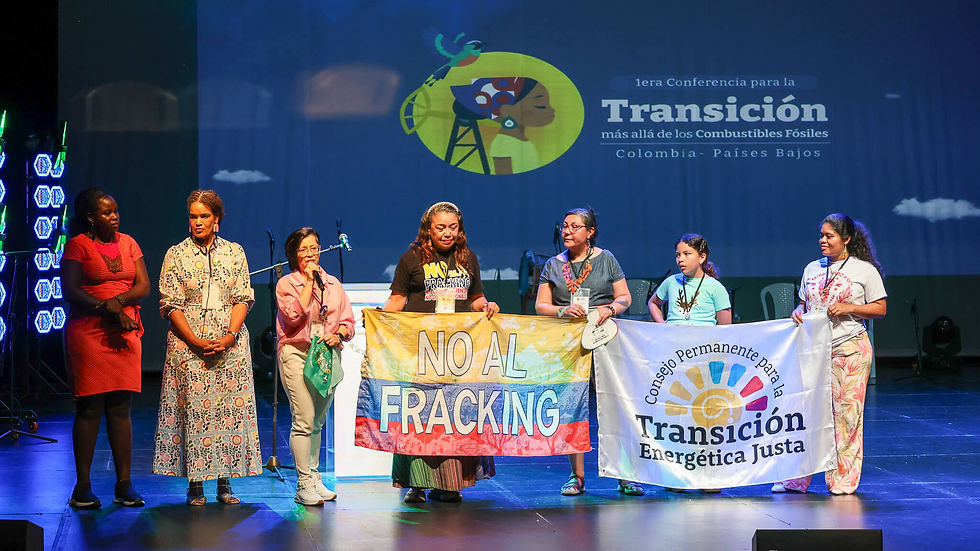
The outputs from the civil society-led People’s Summit contributed to the Assembly of the Peoples held on April 27, coordinated by the government co-hosts. At the Assembly of the Peoples, civil society representatives held final discussions for incorporating collective contributions into a final sectoral document presented to the government by civil society representatives in the High-Level segment. Notably, all chapter representatives elected to represent their sectors in the opening plenary at the High-Level segment were women, sending a strong signal to governments about the vital role of women’s leadership in climate decision-making. Women in all their diversity live on the frontlines of many climate impacts, and at the same time, they are essential leaders in shaping and leading climate solutions. In many regions across the globe, women are leading fights against fossil fuel extraction to protect the health, safety, and resilience of their communities. WECAN will continue to advocate for women’s climate leadership and solutions to guide discussions and negotiations concerning the fossil fuel phaseout.
Indigenous Peoples Assembly - April 26-27
The Indigenous Peoples Assembly occured concurrently to other activities from April 26-27. The Assembly was organized by OPIAC, or the Organización Nacional de los Pueblos Indígenas de la Amazonia Colombiana, which is an Indigenous institution of public law representing over 60 Indigenous Peoples in the Colombian Amazon and working to uphold the respect and recognition of collective and individual rights.
The Indigenous Peoples Assembly followed a similar process to the civil-society led People’s Summit, spending weeks online, and then in-person, to consolidate submissions by Indigenous organizations and communities to develop a collective statement and contribution to share during the High-Level government dialogues. On the ground in Santa Marta, Indigenous leaders finalized their position statement to inform the High-Level segment of the conference.
WECAN delegates, Casey Camp-Horinek (Ponca Nation) and Julia Horinek (Ponca Nation), attended and provided interventions during the Assembly, advocating for Rights of Nature and language that denounced carbon markets and false solutions.
Left: Casey Camp-Horinek (Ponca Nation), Ponca Nation Environmental Ambassador and WECAN Delegate, speaking at the Indigenous Peoples Assembly calling for the advancement of Rights of Nature and no false solutions, including carbon markets. Photo Credit: Katherine Quaid/WECAN | Right: Arhuaco Indigenous leaders provided an opening ceremony and remarks to begin the Indigenous Peoples Assembly, held on April 26-27. Photo Credit: Katherine Quaid/WECAN |
High-Level Government Segment - April 28-29

The High-Level conference took place from April 28-29, where government representatives, civil society, and other stakeholders engaged in discussions and presented submissions. Osprey Orielle Lake, WECAN Executive Director, attended the High-Level segment. Please see this video (below) with reflections from Casey Camp-Horinek (Ponca Nation) and Osprey Orielle Lake on the first day of the High-Level segment.
There were three primary outcomes from the High-Level government dialogues. First, Tuvalu and Ireland announced that they would co-host the next international conference in the Pacific in 2027. This next convening will aim to deepen the work on implementing solutions and confronting the barriers to a fossil-free future.
Second, to keep the momentum going until next year’s gathering, governments agreed to form a coordination group and share the conference outcome report to UNFCCC workstreams, including the COP30 Presidency’s fossil fuel phaseout roadmap in Bonn, London Climate Action Week, New York Climate Week, and the second Global Stocktake. Governments also agreed to establish three working groups, which are open to interested countries, that will identify concrete steps toward a fossil fuel phaseout:
Work on roadmaps: will aim to help governments develop roadmaps aligned with NDCs and facilitate coordination for implementation.
Work on macroeconomic dependencies and financial architecture: together with the International Institute for Sustainable Development (IISD), will support changes to financial systems, enable finance, and determine key stakeholders. It will focus on debt constraints and financial incentives.
Work on producer–consumer alignment for fossil fuel transition: supported by the OECD, will map opportunities to connect fossil fuel producers and consumers in order to promote a fossil-free trade system. It will also aim to advance energy sovereignty and address revenue exchange by promoting people-centered and territorially grounded transitions.
Third, governments launched the Science Panel for the Global Energy Transition (SPGET) to provide technical support for addressing legal, financial, and political barriers to the energy transition, providing countries with specific research to develop national phaseout pathways.
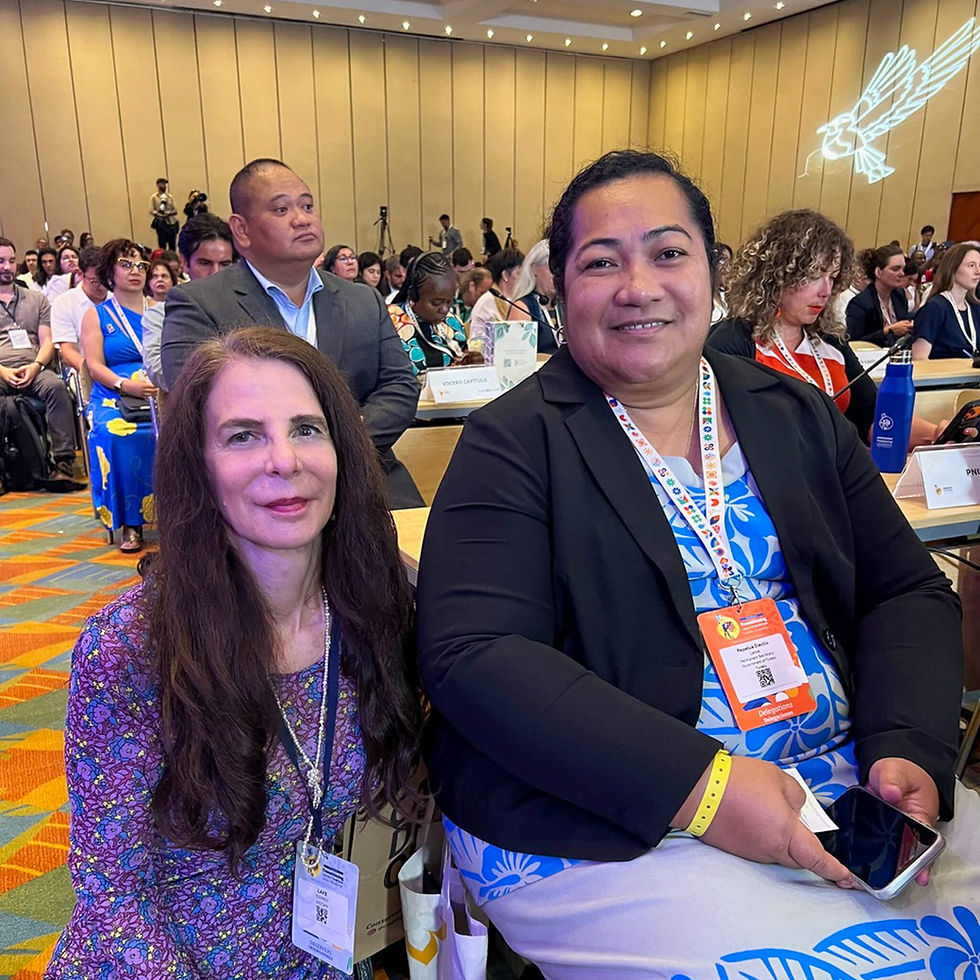
While civil society contributed significantly to the conference and held the line on false solutions and market-based mechanisms, the co-host takeaways and the government summaries of contributions fall short of the substantial recommendations made by civil society and key stakeholders, demonstrating the need to push for more ambitious commitments at next year’s conference. There was not enough representation of Indigenous Peoples at the decision-making table regarding their territories, and Indigenous science and scientists were not included in the SPGET. As we move forward in the process civil society engagement must be improved to ensure those who have long advocated for a fossil fuel phaseout are more substantially included in the decision-making process and given more opportunities for meaningful engagement.
Santa Marta set vital groundwork, but it also laid bare the challenges that remain to actualizing a Just Transition, including the conference process itself. While Santa Marta welcomed a more innovative methodology to vet attendees and integrate inputs from key stakeholders, concerns remain. Further, Indigenous nations are not stakeholders, but rather are rightsholders, and thus need proper representation. Barriers to participation also included visa issuances and funding constraints that prevented equitable representation from Global South communities. It will be important to address these challenges moving forward to build upon the progress made in Colombia.
Even with these important critiques, in Santa Marta, the message was clear: the time for a fossil fuel phaseout is here, and we will continue to build and move forward to create a world where communities and ecosystems thrive. This is the first step in a historic path, and WECAN is ready to continue the work as we look ahead to the 2027 conference in Tuvalu.
WECAN Events and Strategy Sessions at the First Conference on Transitioning Away from Fossil Fuels

WECAN was honored to organize and advocate with an incredible group of frontline and Indigenous women leaders. We organized and participated in events and strategy sessions building connections and amplifying calls for action.
Thank you to the WECAN Delegation to Santa Marta:
Casey Camp-Horinek (Ponca Nation), Ponca Nation Environmental Ambassador and WECAN Board Member and Project Coordinator, Turtle Island/USA
Julia Horinek (Ponca), Co-Founder of 4 Winds Intertribal Coalition, Plains Organizer with Movement Rights, and WECAN Project Coordinator, Turtle Island/USA
Katherine Quaid (Confederated Tribes of Umatilla), Communications Director of WECAN, Turtle Island/USA
Osprey Orielle Lake, Executive Director of WECAN, Turtle Island/USA
Special thanks to volunteer Rozalia Agioutanti for her supportive efforts leading up to and on the ground in Colombia.
Women's Fossil Fuel Phaseout Forum: Halting Extraction and Advancing a Just Transition

On April 25, WECAN hosted an event in Santa Marta, Women's Fossil Fuel Phaseout Forum: Halting Extraction and Advancing a Just Transition, with two panels and a keynote intervention featuring global women leaders fighting to end fossil fuel extraction in the Amazon rainforest, advance a fossil fuel phaseout, and build a Just Transition. The evening was filled with powerful testimonies, collective visions for climate justice, and bold calls to action for building the just and vibrant world we know is possible.
The first panel of the event, “No Extraction in the Amazon: Indigenous Women Protecting Forests and Communities” was co-hosted by Amazon Watch and WECAN. The powerful panel highlighted Indigenous women’s ongoing efforts to stop fossil fuel extraction in the Amazon Rainforest, while protecting Indigenous rights, biodiversity, and our global climate– including the #NoMoreOil campaign to declare the Amazon a fossil-fuel-free zone.

Thank you to the incredible speakers:
Aura Tegria (U’wa), U’wa Indigenous Leader, Lawyer and Vice Minister of Ethnic Peoples and Campesinos of Colombia, Colombia
President Olivia Bisa Tirko (Chapra), President of the Autonomous Territorial Government of the Chapra Nation (GTANCH), Peru
Abigail Gualinga (Kichwa), Vice President Elect of the Kichwa Community of Sarayaku, Ecuadorian Amazon, Ecuador
Luene Karipuna (Karipuna), Executive Coordinator of the Association of Indigenous Organizations of Amapa & Northern Para (APOIAP) in the Brazilian Amazon, Brazil
Jani Silva, Campesina Leader from Perla Amazonica in Putumayo, Colombia
Co-moderated by Leila Salazar-López, Executive Director of Amazon Watch, Turtle Island/USA, and Osprey Orielle Lake, Executive Director of WECAN, Turtle Island/USA
Left: Luene Karipuna (Karipuna), Executive Coordinator of the Association of Indigenous Organizations of Amapa & Northern Para (APOIAP) in the Brazilian Amazon, discusses ongoing efforts to stop fossil fuel extraction in the Amazon, while protecting Indigenous rights, biodiversity, and our global climate. Photo credit: Katherine Quaid/WECAN | Right: Susana Muhamad, Special Envoy to the Fossil Fuel Treaty, and Former Minister of Environment and Sustainable Development of Colombia, delivered a dynamic keynote during the WECAN event “Women's Fossil Fuel Phaseout Forum: Halting Extraction and Advancing a Just Transition”. Photo credit: Katherine Quaid/WECAN |
During the forum, Susana Muhamad, Special Envoy to the Fossil Fuel Treaty, and Former Minister of Environment and Sustainable Development of Colombia, gave a dynamic keynote intervention about her vision for the government conference and the vital role of civil society.
The second panel, “Women in Action for a Just Transition”, featured speakers sharing calls and intersectional approaches to transform our local and global systems and champion a regenerative, rights-based Just Transition that prioritizes communities and nature.

Thank you to the outstanding speakers:
Yuvelis Natalia Morales Blanco, Member of the Alianza Colombia Libre de Fracking, and 2026 Goldman Prize Winner, Colombia
Seble Samuel, Head of Africa Campaigns & Advocacy with the Fossil Fuel Treaty Initiative, Ethiopia
Xiye Bastida (Otomi-Toltec), Co-Founder and Executive Director of the Re-Earth Initiative, Mexico
Casey Camp-Horinek (Ponca Nation), Ponca Nation Environmental Ambassador and WECAN Board Member and Project Coordinator, Turtle Island/USA
Osprey Orielle Lake, Executive Director of WECAN, Turtle Island/USA
Fossil Fuel Extraction in the Amazon: Reception of Rights of Nature Cases
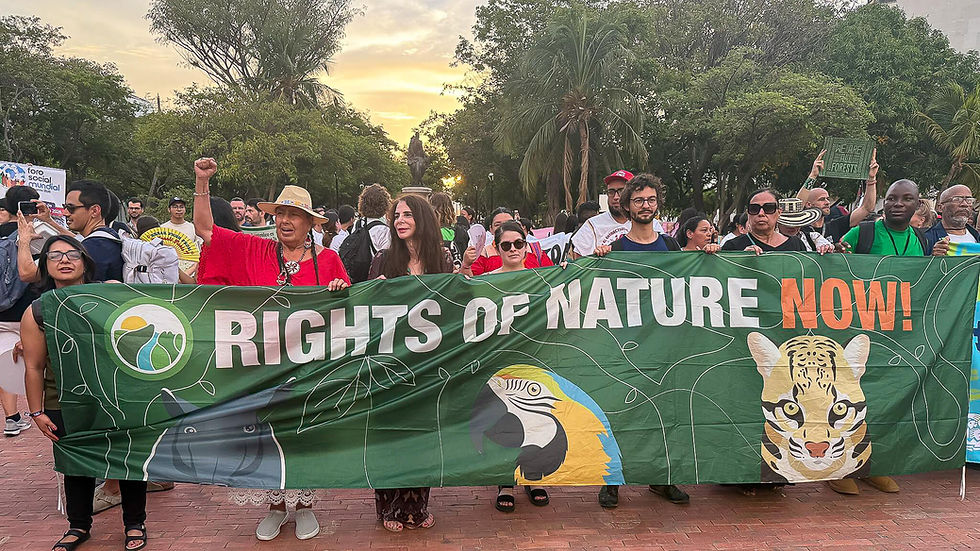
On April 26, WECAN participated in a closed-door event hosted by the Global Alliance for the Rights of Nature (GARN) to hear and admit Rights of Nature cases filed by impacted communities and organizations regarding current or proposed fossil fuel projects in the Amazon. Six cases from Colombia, Venezuela, Peru, Brazil, Ecuador, and Bolivia, were admitted for full hearings at the upcoming Rights of Nature Tribunal in August, all concerning fossil fuel expansion in the Amazon.
Casey Camp-Horinek (Ponca Nation), Chair of the Indigenous Council for the Global Alliance for the Rights of Nature (GARN) and WECAN Board Member and Project Coordinator; and Osprey Orielle Lake, WECAN Executive Director and Executive Committee member of the Global Alliance for the Rights of Nature, both participated as Judges during the event. WECAN is honored to serve on the Executive Committee of GARN.
The session was not public to protect judges and environmental defenders facing ongoing risks of violence and intimidation. The reception of cases comes ahead of the upcoming public session hearing scheduled to take place this August 2026 in Ecuador at the XII Pan-Amazon Social Forum (FOSPA) in Puyo–Yasuní National Park. The Pan-Amazon Social Forum will be held August 16-22, and will bring together Indigenous Peoples, Afro-descendant communities, and organizations from the nine countries of the Amazon basin.
March for a Fossil Free Future

On April 27, civil society marched through Santa Marta, Colombia calling for a Fossil Free Future. Movements carried signs demanding an end to the era of fossil fuels and ongoing militarization, and urgent calls for systemic change and a Just Transition. WECAN delegates marched through the streets, which ended in a closing rally where local and global climate leaders shared their voices and the need to overcome systemic barriers for a fossil free future.


Conference of the Fossil Fuel Free Territories

On April 24-25, Indigenous Peoples, rural communities, Afro-descendants, and environmental defenders gathered for the Conference for Fossil Fuel-Free Territories. WECAN joined participants in exploring a shared vision for territorial justice and advancing the Rights of Nature movement. The outcome was the Declaration from the Territories, a powerful statement which rejects greenwashing approaches to the energy transition that perpetuate extractivism and ecological harm. Notably, the Declaration calls for the recognition of key ecosystems as rightsholders and for the creation of extraction-free protected zones. The Declaration from the Territories was presented at the Peoples’ Summit by GARN Director Natalia Greene.
Press Conference: ¡No Mas Petróleo en la Amazonia! / No More Oil in the Amazon!

On April 25, the seven Indigenous nations of the South Central province in the Ecuadorian Amazon, Pastaza,—Kichwa, Sápara, Andwa, Shiwiar, Achuar, Waorani, and Shuar—issued an urgent call to the Ecuadorian State, the international community, and financial actors to demand that Ecuador cancel the Ronda Petrolera Suroriente and declare the Amazon a fossil-fuel-free zone.
The Indigenous Peoples of Pastaza are critical defenders of their territories, including the 3 million hectares within the Amazon Rainforest that the oil expansion project proposes be available for auction. The proposed oil expansion project has not upheld Free, Prior, and Informed Consent and contradicts global climate commitments. During the press conference, Indigenous leaders from the seven nations expressed their demands for #NoMoreOil, and named what is at stake for their communities and the Earth.
Global Citizen: Fireside Chats & Lunch Reception
Left: At Global Citizen’s High-Level Session in Santa Marta, Casey Camp-Horinek (Ponca Nation), Ponca Nation Environmental Ambassador and WECAN Board Member and Project Coordinator, shared a call for the rights, demands, and solutions from Indigenous communities to be respected and centered in the just phaseout of oil, coal, and gas. Photo Credit: WECAN | Right: Leaders discussed the pathways and mechanisms to advance a rapid, equitable, and funded transition away from fossil fuels during the Global Citizen Fireside Chats, including a Fossil Fuel Treaty. Photo Credit: WECAN |
Hosted by Global Citizen and the Fossil Fuel Treaty Initiative Secretariat, this event took place ahead of the High-Level Dialogues for the First Conference to Transition Away from Fossil Fuels, with three fireside chats featuring Treaty leaders, government representatives, and academic researchers.
During the event, Casey Camp-Horinek (Ponca Nation), Ponca Nation Environmental Ambassador and WECAN Board Member and Project Coordinator, intervened with a call for the rights, demands, and solutions from Indigenous communities to be respected and centered in the just phaseout of oil, coal, and gas. See her intervention here.
Financial Roadmaps towards a Just Phaseout and a Fossil-Free Amazon


Partners, including Amazon Watch, BankTrack, Parliamentarians for a Fossil Free Future, and more held a special event on April 28, “Financial Roadmaps towards a Just Phaseout and a Fossil-Free Amazon.”
During the event, parliamentarians, Indigenous leaders, and campaigners, shared the latest analysis on realigning finance to deliver a Just Transition. This event explored what financial architecture and reforms are needed for a phaseout and advocated for aligning both private and public sector financing with the goals of the Paris Agreement and delivering a just clean energy future.
Strategy Sessions with Partners and Colleagues
Please see below a few highlights from WECAN conversations and strategy sessions held during the First Conference on Transitioning Away from Fossil Fuels.
Left: Osprey Orielle Lake, WECAN Executive Director with Mary Robinson, Former President of Ireland and Co-Founder of Project Dandelion. | Center: (left to right) Xiye Bastida (Otomi-Toltec), Co-Founder and Executive Director of the Re-Earth Initiative; Hindou Oumarou Ibrahim, Coordinator of Indigenous Women and Peoples Association of Chad; Casey Camp-Horinek (Ponca Nation), Ponca Nation Environmental Ambassador, WECAN Board Member and Project Coordinator; Mary Robinson, Former President of Ireland and Co-Founder of Project Dandelion; and Julia Horinek (Ponca Nation), WECAN Ponca Project Coordinator. | Right: Representatives from the Women and Gender Sector, including Katherine Quaid, WECAN Communications Director, met with Mary Robinson, Former President of Ireland and Co-Founder of Project Dandelion. |
WECAN was grateful to meet with Mary Robinson, Former President of Ireland and Co-Founder of Project Dandelion. We discussed the critical components for a Just Transition and fossil fuel phaseout, and how women are leading solutions, narrative transformation, and successful strategies for people and the planet.

Left: Osprey Orielle Lake, Executive Director of WECAN, connected with longtime colleague and friend Jacqui Patterson, Founder and Executive Director of The Chisholm Legacy Project, and Cheryl Kwapong, Senior Project Director of The Chisholm Legacy Project, to discuss Just Transition efforts and advocacy looking ahead to the second conference in 2027. | Right: Osprey Orielle Lake spoke with Rosa Galvez, Canadian Senator and Signatory of the Parliamentarians for a Fossil Fuel Free Future to discuss next steps in advocating for fossil fuel phaseout at a regional and national level. |
Interview with We Don’t Have Time

During the first day of the High-Level segment of the First Conference on Transitioning Away from Fossil Fuels, Casey Camp-Horinek (Ponca Nation), Ponca Nation Environmental Ambassador and WECAN Board Member and Project Coordinator, spoke on a panel discussing the impacts of fossil fuel dependence on women and girls.
The panel was hosted by We Don’t Have Time, the Conference’s Official Global Media Partner, who amplified key moments and voices from the conference to build momentum behind the implementation of a global transition away from fossil fuels.
During the panel, Casey spoke about her territory and the impacts of fossil fuel extraction and its connection to the epidemic of Missing, Murdered, Indigenous Women and Girls, and the need to uphold Indigenous rights and sovereignty in the fossil fuel phaseout. Watch the panel discussion here.
Fossil Fuel Treaty Strategy Session


Following the activities of the First Conference on Transitioning Away from Fossil Fuels, Osprey Orielle Lake participated in the closing Fossil Fuel Treaty Strategy Session to debrief and look toward the second conference in Tuvalu in 2027.
WECAN is honored to serve on the Steering Committee of the Treaty and to support the advocacy efforts within international forums calling for a binding and just Fossil Fuel Treaty.
Connecting with Indigenous Peoples of the Santa Marta Region
WECAN delegates were very honored to be invited to connect with representatives from the four Indigenous Nations of the Sierra Nevada de Santa Marta: Kogi, Arhuaco, Wiwa, and Kankuamo.
Within their cosmologies, these communities steward the “Heart of the World,” and protect the sacred balance between humans, nature, and the Earth. We are very grateful for the opportunity to have time with leaders from these communities, and to seed relationships that will grow in the years to come.
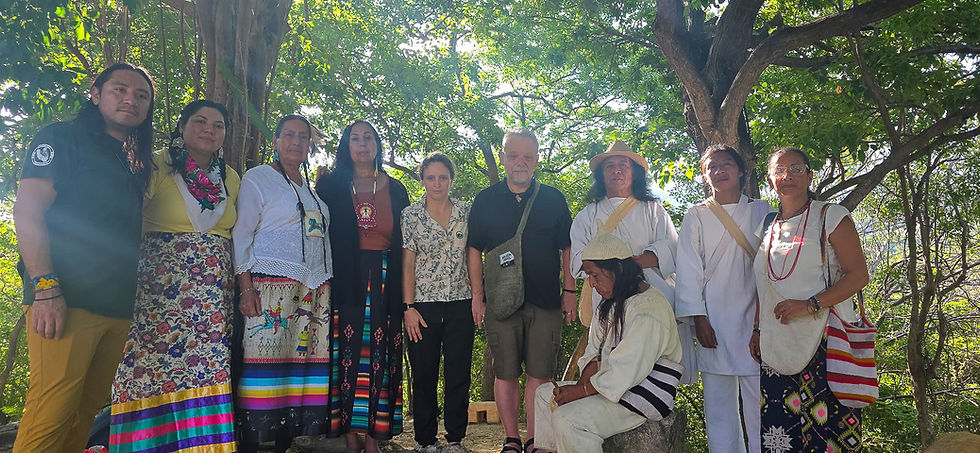
Left: Katherine Quaid, WECAN Communications Director, joined colleagues, partners, and Indigenous women from the Kogi, Arhuaco, Wiwa, and Kankuamo communities, for a closed-door Indigenous women’s listening session. WECAN was honored to support this gathering. | Right: Osprey Orielle Lake, Executive Director of WECAN, and Leila Salazar-López, Executive Director of Amazon Watch, met with Kogi women to learn about their work protecting their territories and culture. |
________
Thank you to the WECAN Team, partners, colleagues, and the many movements who are fighting for a fossil free future!